The Illusion and Dilemma of Relationality: The Rejection of Micro-Utopias
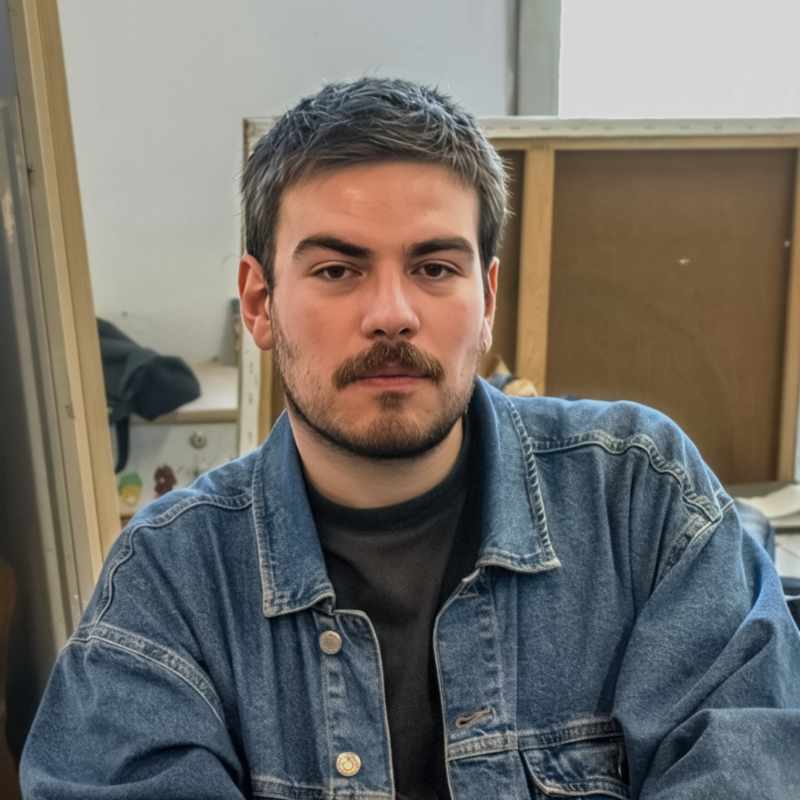 By Yusuf Özcan
The Rejection of Micro-Utopias
Bourriaud's theoretical work was shaped during a 15-year transition period marked by macro-historical events such as the fall of the Berlin Wall, the rise of the European Union, and the acceleration of cultural globalization. The author argued that art should no longer be an "independent and private symbolic space" but rather be based on the "horizon of human relations and its social context." This approach positions the artist as a "facilitator" and the artwork as a "relation-starter." The relationship between Bourriaud's three foundational works is as follows: Relational Aesthetics addresses the convivial (festive) and interactive aspects of art; Postproduction examines the information forms brought by the internet age and the reuse of existing cultural objects (from ready-mades to DJ culture); and The Radicant proposes a global modernity (altermodernity) based on translation and nomadic forms, standing against postmodernism rooted in identity politics.
According to Bourriaud, instead of designing a utopian future, art must create temporary and functional "micro-utopias" within the existing reality that explore relationships that can be established with neighbors in the present. The artwork functions as a "social interstice" (interstice social) that remains outside the laws of capitalist exchange and offers alternative possibilities of transaction. In the postproduction phase, this is reinforced as the artist, rather than creating something from scratch, navigates global information networks like a "semionaut" (sign traveler), using already existing forms to construct new scripts (user manuals), much like a DJ mixing tracks.
However, the role of "inter-human socialization" assigned to art by this transition period is, in fact, the beginning of a profound dilemma into which contemporary art has fallen. The artist's effort to create an "experience" via a "rendezvous" aspect and the hope of establishing an "interaction platform" with the audience can be interpreted as the loss of the artist's ability to produce conflict. This "participatory" democracy, which is an illusion, transforms art from the ontological/artistic objectivity of the work into a simple tool of interaction.
Dissensus is defined as disagreements that disrupt the perceptual frameworks the viewer uses to perceive the surrounding world. Therefore, when an artist attempts to create an experience they believe establishes a relationship with the viewer (a kind of "convivial" connection), what is actually lost is the artist's potential to disrupt these frameworks (dissensus) and challenge the status quo. As Rancière points out, this harmless utopia of "proximity art" (art de proximité), which tasks art solely with filling the gaps of social bonds, strikes a blow against art's autonomy and corrosive power. The power of art lies not in becoming a tool that facilitates a "convivial" bond bringing people together, but in its ability to produce dissensus that cracks the perceptual coordinates of the given order (the police).
Against the Veiling of Conflict
These artificial "spaces of coexistence" and convivial encounters proposed by relational aesthetics produce an illusory consensus that, as Claire Bishop highlights, destroys the critical power of art and covers up real social antagonisms (conflicts). When the formal characteristics and objective weight of the artwork are eliminated in the process of harmony and socialization, what remains is merely a short-lived "game" that masks the general emptiness of the capitalist market. The audience described by Bourriaud consists of a homogeneous group socializing within the pre-determined boundaries of galleries—for this group, the label "elite" might be too optimistic, but they are certainly select and ready for consumption. Yet, the real social sphere is one where irreconcilable conflicts, exclusion, and structural violence prevail.
At this point, rather than reducing art to a cheerful communication network, the concept of "relational antagonism" comes into play, exposing the structural conflicts inherent in the system. To reveal systemic contradictions within the general structure instead of reducing art to a joyful communication network, the term 'relational antagonism' can now be used. For instance, the practices of artists like Santiago Sierra or Thomas Hirschhorn stand in fundamental contradiction to Bourriaud's peaceful micro-utopias. Sierra, through his works, exposes the capitalist exploitation of human labor and how human labor can be commodified through minimum wage by "sorting" people like materials (for example, by tattooing lines on a worker's back or hiding refugees inside cardboard boxes). The relationality established here is not harmony, but a moment of "impasse and obstruction" (impasse) that drives the viewer into discomfort, rendering the cracks of the given order visible.
Art should not attempt to repair the alienation caused by capitalism by creating artificial communities (functioning as a mediator). On the contrary, art must free itself from this self-proclaimed circular praxis (merely a socialization network) that it will sooner or later assume. Instead, art must escape this self-feeding cycle (socialization) of which it will ultimately become a part. The artwork should function not as a "relation-starter" within the symbolic order, but as a "specific center of gravity" in that order, based on its unique identity and inner integrity.
Instead of producing objects dedicated solely to technique or self-assured communication networks, there is a need for a commanding and disciplining form of art practice that views art as a dialectical moment, investigates cracks in the existing system, and accelerates the tension within these cracks. Pursuing grand narratives and harmony has not only diminished art's ontological legitimacy but has also concealed the fact that this grand universal narrative and idea of progress, in which humanity has believed for centuries, is actually nothing but wreckage. To infiltrate the cracks of the system, it is first necessary to accept that this lie of smooth progress has collapsed.
The Bankruptcy of the Myth of Progress
The illusion of harmony into which relational aesthetics and contemporary art have fallen is, in fact, nothing other than an attempt to mask the collapse of the "myth of progress," one of the biggest lies of capitalist modernity. As anthropologist Anna Lowenhaupt Tsing accurately emphasizes, stories of progress have blinded us, trapping us in the assumption that the future is always a one-way movement forward. Yet, this vision of progress and global capitalism has irreversibly alienated ecological and social relations ("first nature"), leaving behind only vast, abandoned, depleted, and simplified "wreckage" ("second nature"). In Tsing's words, "progress no longer makes sense," and the number of us who look up one day to see that the emperor has no clothes is steadily increasing.
This being the case, reducing art to a festive tool of "socialization" played upon this wreckage, serving only to fill leisure time or alleviate alienation, is a betrayal of art's historical and ontological potential. In the absence of progress narratives, the world has become a terrifying place, and the wreckage stares back at us with the horror of its abandonment. Rather than being a band-aid that supposedly repairs this horror, art must break its self-contained, circular praxis and abandon the uniform, marching rhythm of progress.
Precisely at this point, rejecting the smooth and homogeneous surface of the system, it is essential to focus on what Tsing calls "third nature": the unruly margins and patched spaces of life that manage to survive despite the destruction of capitalism. The actions of "establishing phases in inter-systemic cracks" and "tracing the crack," which form the basis of our conceptual skeleton, find their resonance in this very wreckage. The new praxis of art should be sought not in the flat, shiny showcases of collapsing grand narratives, but in abandoned resource extraction sites, the unruly margins of industrial ruins, and within the cracks.
In this context, contemporary art, rather than designing harmonious relations as Bourriaud envisioned, must load weight onto the cracks of this wreckage left by the system. The metaphor of progress is now insufficient to know and transform the world. The art object must cease to be a communication device that distracts the masses; it must transform into a dialectical moment standing with its own specific gravity in the midst of this wreckage, exposing exclusions and dissensus, settling directly into those "cracks," and accelerating the situation into a new phase. In this place where progressive time has gone bankrupt, it is time to rethink the object not merely as an "interaction tool," but as an autonomous and capable entity in its own right—that is, as an ontological center of gravity.